
Physiatry and Rehabilitation Clinic
Rehabilitation and treatment of the musculoskeletal system.

Our Physiatry and Rehabilitation Clinic at Púpava Polyclinic provides comprehensive diagnostics, treatment and prevention of musculoskeletal disorders. We focus on modern rehabilitation procedures, treatment of acute and chronic pain, post-injury and post-surgical care, and support for regeneration of the musculoskeletal system.
When to visit
a physiatrist or rehabilitation physician
We recommend making an appointment if you have:
- spine, neck or joint pain
- consequences of injury, fracture or post-operative complications
- neurological problems (e.g. after stroke, with multiple sclerosis)
- sports injuries or muscle strain
- rheumatological diseases associated with limited mobility

Our services
Physiatric examination
The doctor thoroughly assesses your health condition, establishes a diagnosis and recommends an individual treatment and rehabilitation plan.
Rehabilitation
We prepare individual rehabilitation programs that include:
- therapeutic physical education
- mobilization and stabilization techniques
- exercises for muscle strengthening and relaxation
- massages and soft tissue techniques
Modern therapeutic methods at
Púpava Polyclinic
For the best treatment results, we use the most modern device therapies:
Electrotherapy
Relieves pain, releases muscle tension and improves blood circulation.
Robotic laser
Precise and effective laser therapy supporting tissue regeneration.
Hilterapy
High intensity laser therapy suitable for acute and chronic conditions.
Magnetic robotic system
Modern form of targeted magnetotherapy.
Shock wave therapy
Effective for pain in attachments, tendons, fascia and chronic inflammation.
Magnetotherapy
Supportive therapy for pain, inflammation and healing disorders.
We adapt each procedure to the diagnosis, patient's age and type of difficulties.
Gas Injections (Carboxytherapy)
Gas injections represent subcutaneous application of medicinal carbon dioxide (CO₂). It is a reflex therapeutic method in which locally applied CO₂ is rapidly absorbed into the subcutaneous tissue. It creates mild pressure in the tissue, which is subjectively perceived as a sensation of warmth.
The application of CO₂ creates a local oxygen debt, which leads to vasodilation (widening of blood vessels) and subsequent improvement of local and overall tissue blood circulation. At the same time, tissue nutrition improves, muscle tension is released, connective tissue elasticity increases and regeneration processes are supported.
An indirect effect is also the influence on free nerve endings, which leads to pain relief.
Therapeutic effects
- increased tissue blood circulation
- reduced muscle tension
- pain relief
- support for healing and tissue regeneration
Indications
Gas injections are used in the treatment of:
- back pain (cervical, thoracic and lumbar region)
- joint pain and arthrosis
- headaches and migraines
- selected neurological diseases
- limb circulation disorders
Application method
5 – 50 ml of CO₂ is applied depending on the patient's body constitution and the treated area.
For periarticular application of small joints (e.g. ankle, wrist), doses of 1 – 5 ml are used.
The maximum daily dose is 300 ml of CO₂.
Treatment regimen
Treatment takes place in series (cycles):
- minimum of 5 – 6 applications
- maximum of 10 applications in one cycle
- after completing a cycle, a break of at least 1 month is required
- standard application frequency is every other day
Why choose Púpava Polyclinic
Most common causes of back pain and their solutions
Back pain is among the most common civilization problems. Lack of movement, prolonged sitting and stress cause spinal pain to affect people of all ages.
At Púpava Polyclinic we focus on thorough diagnosis and treatment of these difficulties and help patients return to active life.
Most common causes of spinal pain
Muscle imbalance and overload
Occurs with prolonged sitting or incorrect load. Manifests as pain, stiffness and limited movement.
Herniated disc
A damaged intervertebral disc can irritate nerve roots and cause radiating pain.
Degenerative spinal diseases
Arthrosis, spondylosis and other changes often appear with advancing age or excessive physical stress.
Injuries and microtraumas
Repeated incorrect movement patterns or microtraumas lead to long-term pain.
Stress and psychological overload
Increased muscle tension caused by stress can worsen spinal pain.
How physiatry will help you
In our clinic we provide:
- physiatric examination and in-depth diagnostics
- rehabilitation focused on muscle strengthening and relaxation
- modern physiotherapeutic procedures (laser, electrotherapy, magnetotherapy, shock wave therapy, Hilterapy…)
- advice on prevention and correct posture
When to visit a specialist
We recommend making an appointment if:
- pain lasts longer than 2 weeks
- pain radiates to limbs or is accompanied by numbness
- pain worsens at night
- you have limited mobility or muscle weakness
Prevention of back pain
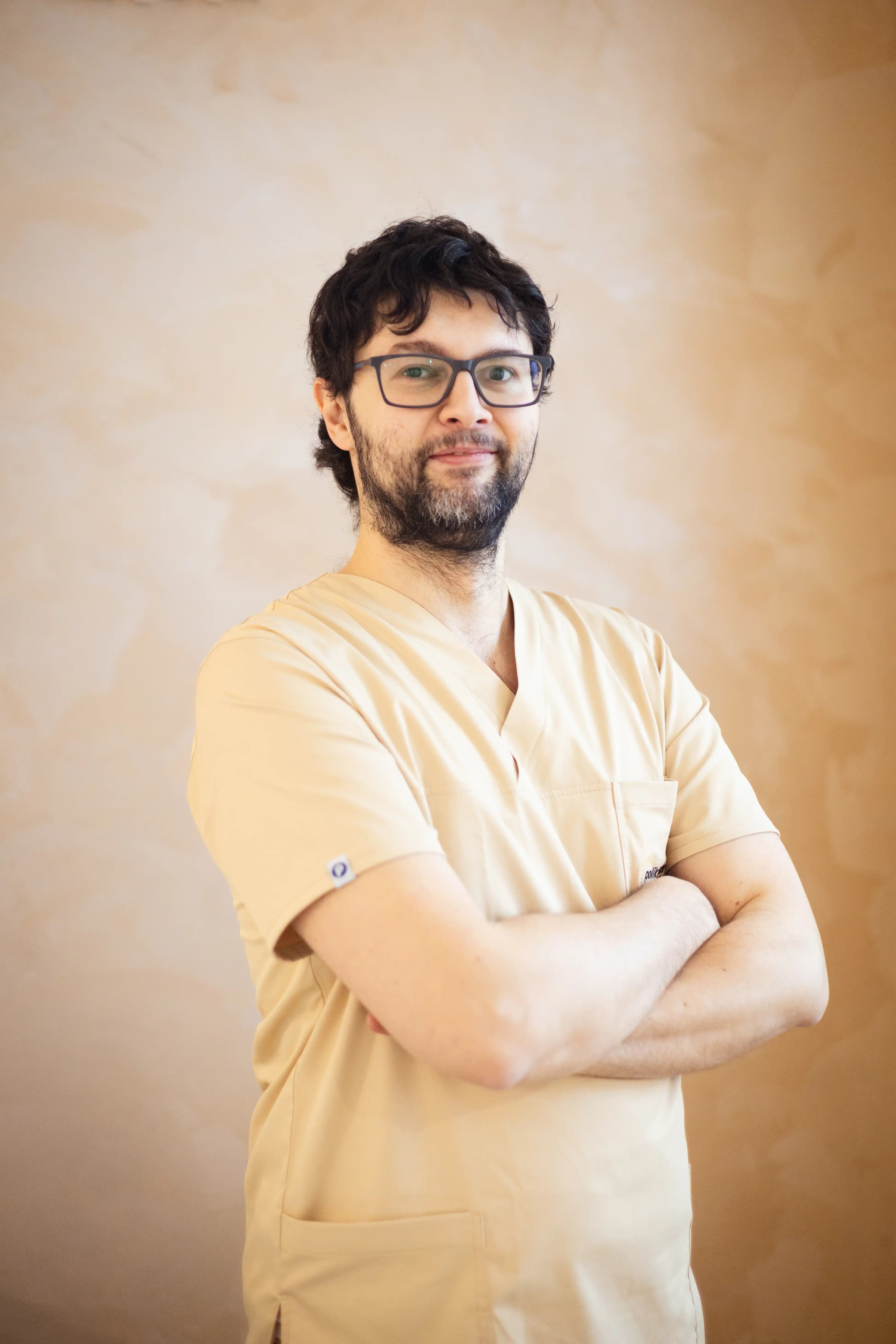
Will be attending to you
Experienced professionals who will attend to you with a human approach.

Ready to take
the first step?
Book your examination today. We are here for you and your family.