
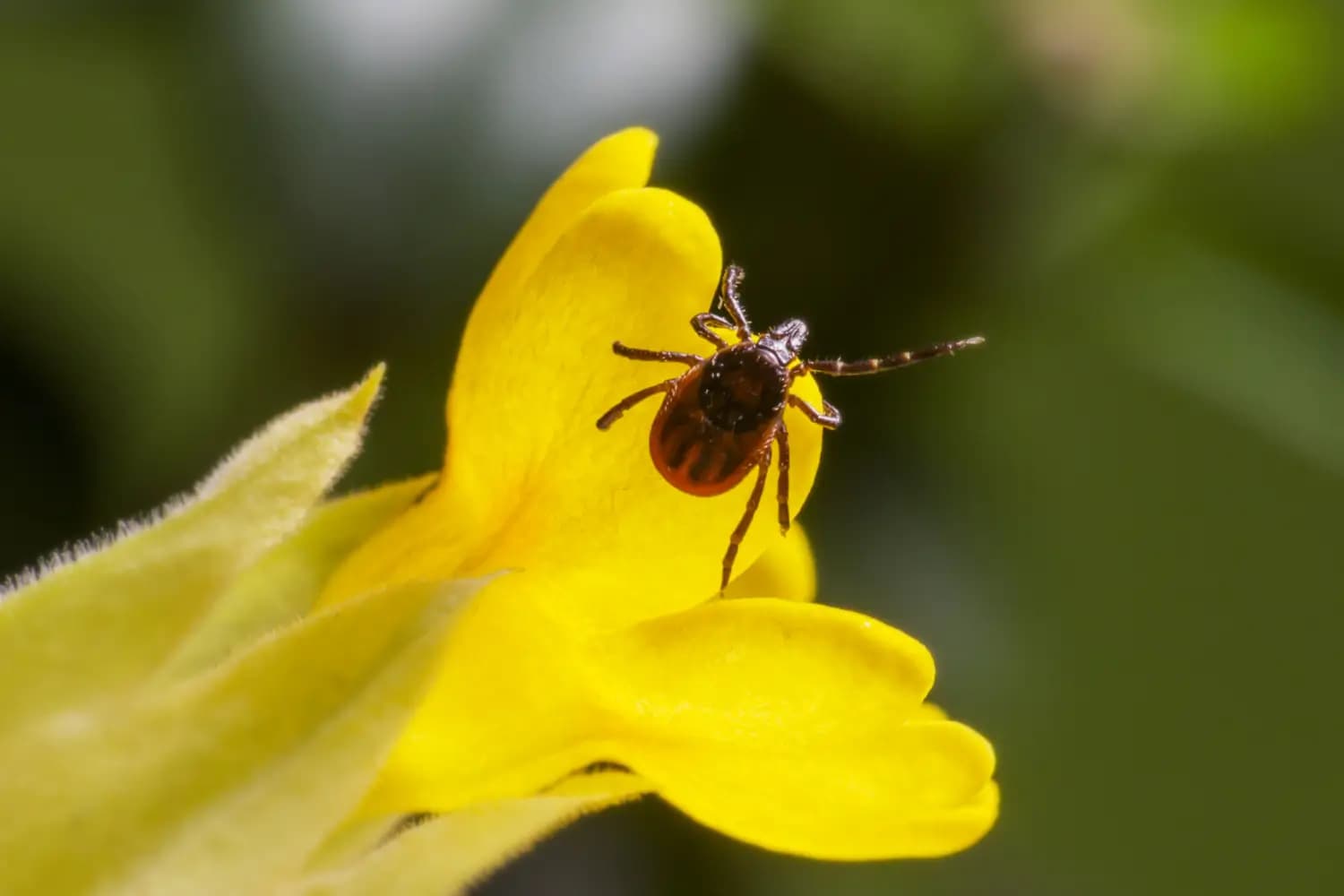

Summer time spent outdoors increases the risk of a tick bite from Ixodes ricinus, one of the most common carriers of dangerous infections.
There is no need to panic immediately, but it is important to know the facts about two main tick-borne diseases: tick-borne encephalitis and Lyme disease.
Two different pathogens: why timing matters
With one disease, every minute counts – tick-borne encephalitis. With the other, you have relatively more time to react safely – Lyme disease:
- Tick-borne encephalitis (virus): Transmission occurs almost immediately after attachment, because the virus is found directly in the tick's saliva. The most effective protection here is prevention through vaccination (suitable for children from 1 year of age).
- Lyme disease (bacteria): The bacteria live in the tick's gut. They begin to enter the child's body only after 24 to 48 hours from attachment. If you find and properly remove the tick on the same day, you minimize the risk of Lyme disease.
The correct procedure for removing an attached tick
Old folk remedies are strongly discouraged by modern medicine today. Forget dripping oil or applying cream – the tick will suffocate and reflexly expel infected gut contents directly into the child's wound.
- Tool: Use fine tweezers or a special tick removal card from a pharmacy. Grasp the tick as close to the skin as possible (by the head).
- Movement: Pull steadily straight upward, without twisting. Twisting risks breaking the tick and leaving its head in the skin, where it can cause local inflammation.
- Disinfection: Treat the site immediately with an iodine-based or alcohol disinfectant.
What to watch for immediately after tick removal?
Shortly after tick removal, when disease transmission occurs (especially tick-borne encephalitis), the following may appear:
Flu-like symptoms: Elevated temperature or fever, headache, fatigue, weakness, muscle and joint pain. Tick-borne encephalitis often progresses in two phases – after temporary relief, symptoms may return with much greater intensity (stiff neck, vomiting, sensitivity to light).
Enlarged lymph nodes: Pay attention to lymph nodes near the site where the tick was attached (for example on the neck, in the armpit, or in the groin).
What to watch for over 3 weeks?
After removing the tick, note the date in your calendar and monitor the child for 21 days (3–4 weeks). Warning signs include:
- Erythema migrans (Lyme disease): A typical red patch with a white center that gradually expands and has a diameter of more than 5 cm. It requires immediate antibiotic treatment. (Note: A small red spot up to 1–2 cm that disappears within two days is only a normal reaction to the bite.)
Blood sampling for Lyme disease antibodies is recommended at the earliest 4–6 weeks after the tick bite. If blood is taken too early, the result will be falsely negative. Serology is performed in two steps – first a screening test is done, and if it is positive or borderline, it is automatically verified with a confirmatory test.
How to protect against ticks?
Proper clothing: Wear light-colored clothing (ticks are easier to spot on it) with long sleeves and long trousers. Pull socks over trousers to prevent ticks from reaching the skin.
Use repellent: Spray repellent on skin and clothing (especially on shoes, ankles, and knees). For children, choose products with a lower concentration of active ingredient (DEET, Icaridin) or natural alternatives.
Vaccination: If you spend a lot of time outdoors, consider vaccination against tick-borne encephalitis (there is no vaccination against Lyme disease).
More tips for the outdoors:
Stay on paths: Ticks lurk mainly in tall grass, shrubs, and at forest edges up to about one meter high (they do not jump from trees). Avoid walking directly through dense vegetation.
Do not sit directly on grass: For picnics or rest, use a light blanket, ideally with a waterproof bottom layer.
What to do after returning home?
Thorough body check: Ticks prefer warm and moist areas. As soon as you get home, check yourself and your children:
- armpits and behind the knees,
- groin and crotch,
- area behind the ears and in the hair (especially in children),
- around the navel.
Shower: Shower as soon as possible. Running water can wash away ticks that have not yet had time to attach.
Clothing care: Wash clothing or put it in a dryer on high heat, which reliably kills any ticks that may be present.
How does vaccination against tick-borne encephalitis work?
Vaccination against tick-borne encephalitis is available for children from 1 year of age and for adults. It is a voluntary vaccination, recommended especially for people who often spend time outdoors in areas with a high occurrence of ticks, as well as foresters, cottage owners, and hikers.
Complete vaccination consists of three doses and provides protection for at least 3 to 5 years. It is administered as follows:
1st dose: Ideally in winter months (January – February), so you are protected before the start of spring tick activity.
2nd dose: Given 1 to 3 months after the first dose. Adequate protection begins 2 weeks after the second dose.
3rd dose: Given 5 to 12 months (or 9 to 12 months, depending on vaccine type) after the second dose to build long-term immunity.
Booster vaccination: The first booster dose is given after 3 years. Further boosters follow every 3 to 5 years (for people over 60, an interval of every 3 years is recommended).
MUDr. Markéta Šumichrastová