
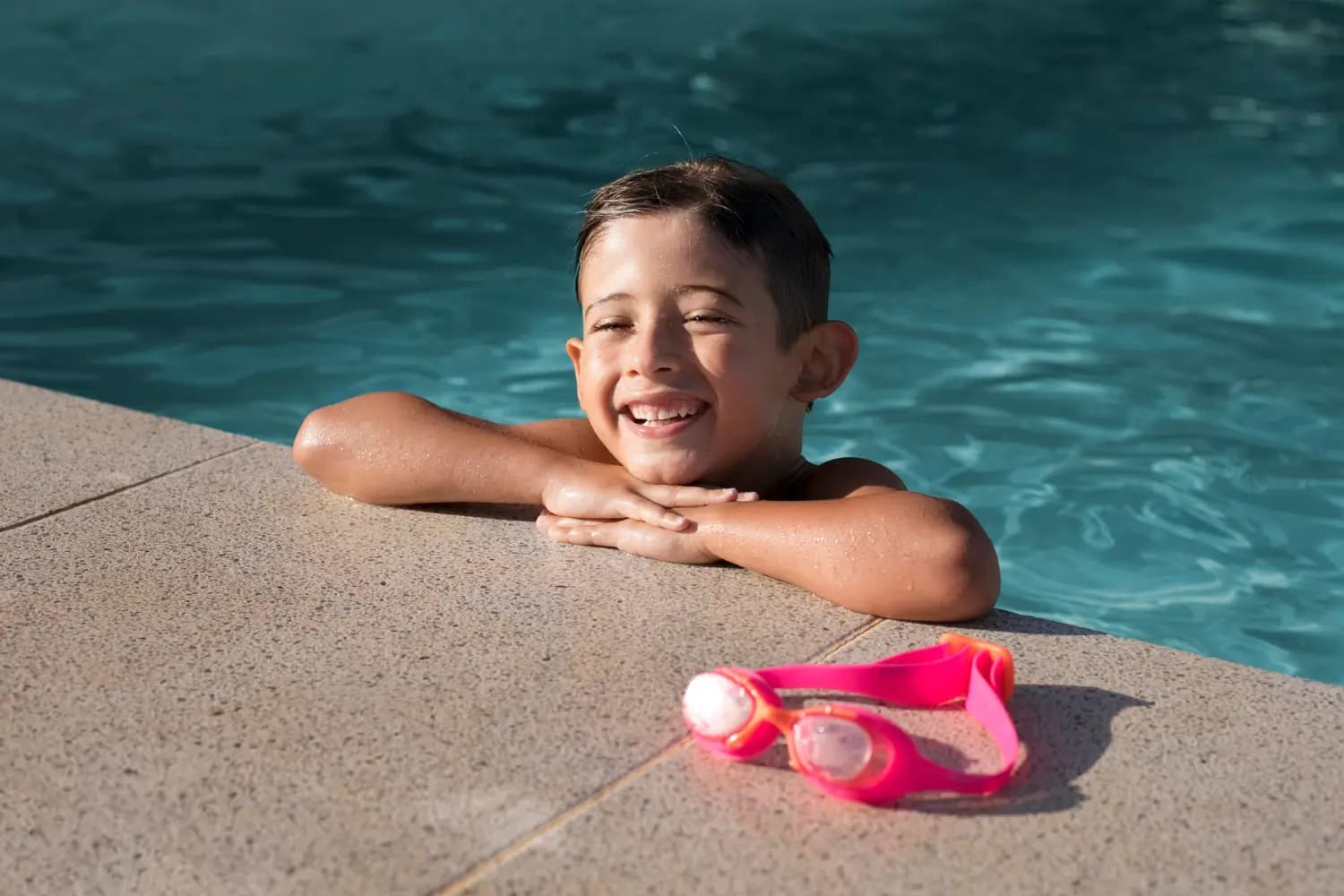

After a day at the pool, a child may start complaining of ear pain in the evening. Parents often do not know whether it is just water in the ear or the beginning of an infection. This is how swimmer's ear can appear – a common summer problem in children. In this article, you will learn how to recognize the first symptoms, what to do about ear pain after swimming, and when it is appropriate to visit a pediatrician or ENT clinic.
What is swimmer's ear?
Swimmer's ear is the common name for inflammation of the outer ear, meaning an infection of the skin and adjacent tissues of the pinna or external ear canal. It is inflammation that develops in front of the eardrum and does not affect the middle or inner ear. Despite its name, it does not only affect children who swim regularly. A few days of intensive swimming during a holiday can be enough. When moisture remains in the ear canal after swimming, the skin becomes irritated more easily and bacteria or fungi can multiply more quickly. The risk is also increased by frequent cleaning of the ears with cotton swabs or mechanical irritation of the ear canal.
What are the symptoms of swimmer's ear?
Unlike middle ear infection, swimmer's ear has different symptoms. A child may experience:
- ear pain that worsens when the ear is touched or the pinna is pulled,
- itching in the ear canal,
- a feeling of blocked ear,
- impaired hearing,
- discharge from the ear,
- redness or swelling of the outer ear.
If there is severe pain, fever, or discharge from the ear, a doctor's visit should not be postponed.
Can swimmer's ear be prevented?
You can reduce the risk of swimmer's ear by following a few simple rules:
- after swimming, let water drain naturally from the ear and gently dry the ear with a towel,
- do not insert cotton swabs or other objects into the ear canal,
- do not remove earwax unnecessarily – it has a natural protective function,
- for children who suffer from repeated ear canal infections, consult a doctor about suitable preventive measures.
Pediatric and ENT clinics at Polyclinic Púpava
- MUDr. Markéta Šumichrastová (pediatric clinic)
- MUDr. Lenka Bučková (ENT clinic)
When to visit a pediatrician and when an ENT clinic?
If the pain persists or worsens, book an examination for your child. The pediatric clinic will assess the child's health and, depending on the findings, recommend treatment or refer the child for an ENT examination. With swimmer's ear, treatment with ear drops prescribed by a doctor is often necessary.
It is advisable to contact the ENT clinic especially if:
- the pain is severe or worsening,
- discharge is coming from the ear,
- the child hears worse,
- the problems keep returning,
- there is an elevated temperature or fever,
- treatment does not bring improvement.
Swimming is one of the most common summer activities. However, if ear pain appears after a day by the water, it should not be underestimated. In most cases, swimmer's ear heals without consequences with proper treatment. However, if the pain does not subside, worsens, or discharge appears from the ear, an examination should not be delayed.